


Walk into any dispensary or vape shop, and you will be greeted by a wall of options. There are pods, disposables, dab rigs, and complex box mods. Yet, amidst the dazzling variety of consumption methods, one format dominates the shelf space: the 510 Cartridge.
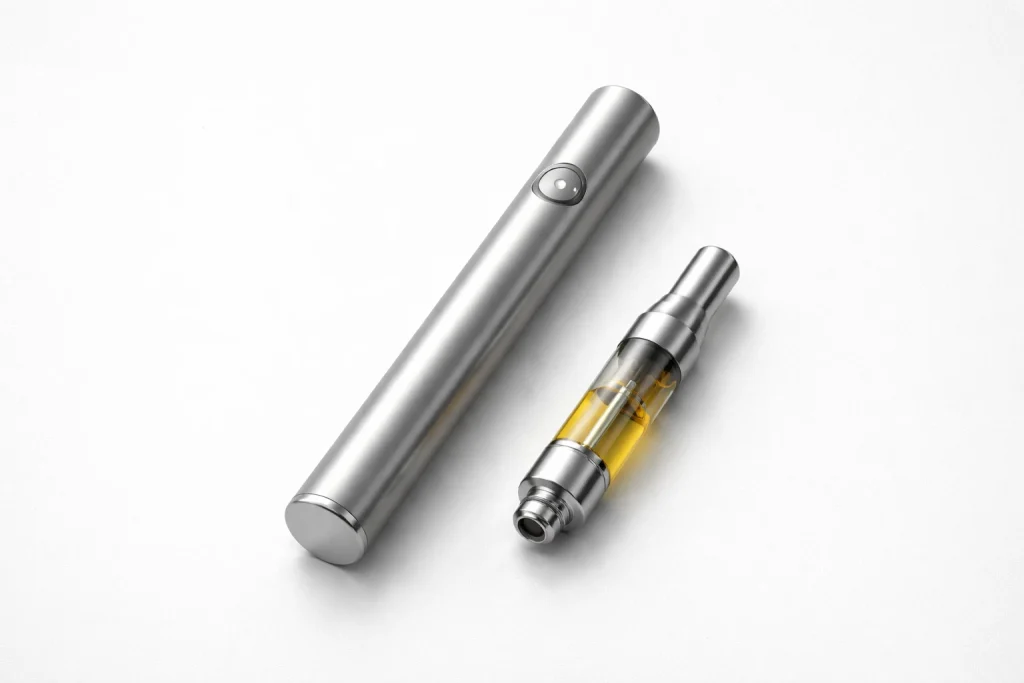
The 510 vape pen has become the industry standard for cannabis and CBD oil consumption. Its rise to the top wasn’t an accident; it was driven by versatility and ease of use. Unlike proprietary systems that lock you into a single brand’s ecosystem, the 510 thread offers a universal language. It allows consumers to mix and match batteries and cartridges from different manufacturers, granting a level of freedom that other devices simply cannot match.
Whether you are a complete novice holding your first vape pen, a seasoned user looking to optimize your voltage settings, or a retailer trying to understand the hardware you sell, this guide covers it all. We will explore exactly what makes these devices tick, how to troubleshoot common issues, and how to get the best possible experience from every drop of oil.
Understanding the 510 Standard
The term “510” might sound like a specialized code, but its origin is mechanical. It refers to the threading used to connect the battery to the cartridge. Specifically, it implies 10 threads at 0.5 mm per thread. While the technical measurements are less important to the average user, the implications of this standard are massive.
Before the 510 thread became ubiquitous, the vaping market was fragmented. Every brand had its own connection type. If you bought a battery from Company A, you could only buy cartridges from Company A. The adoption of the 510 standard democratized the industry. It created a “USB moment” for vaping—a universal compatibility that fueled innovation. Now, hardware manufacturers focus on creating the best batteries, and extractors focus on creating the best oil, knowing that their products will work seamlessly together.
What Is a 510 Cartridge?
At its core, a 510 cartridge (often called a “cart”) is a vessel designed to hold cannabis or hemp oil and turn it into inhalable vapor. While designs vary slightly between brands, the anatomy of a cartridge remains consistent.
The Anatomy of a Cartridge
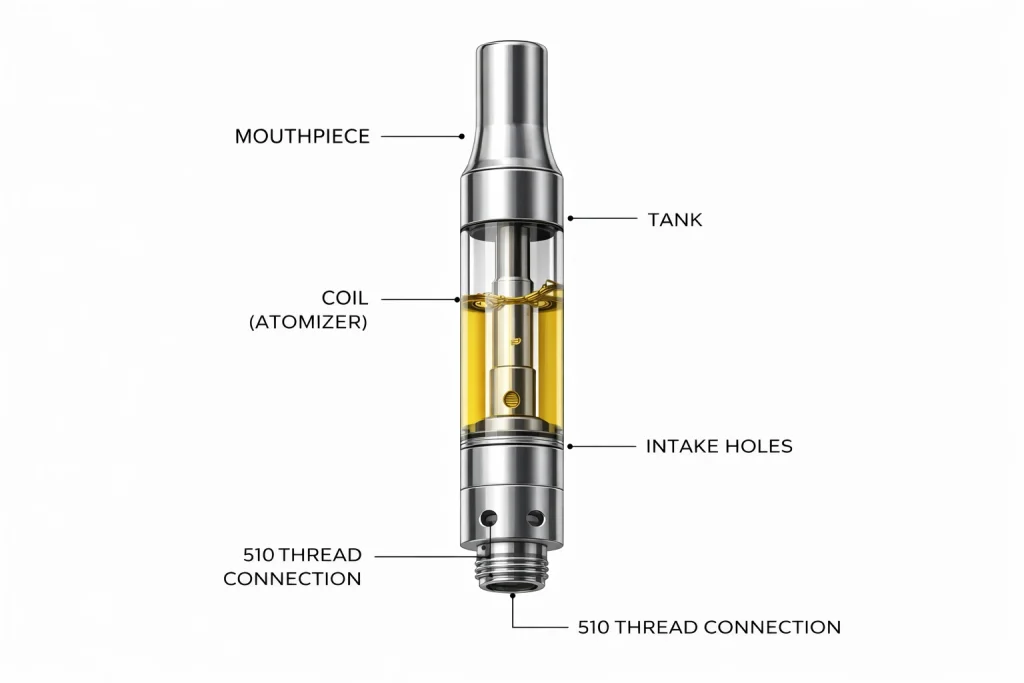
- The Mouthpiece: The tip you inhale from. These can be made of plastic, metal, wood, or ceramic.
- The Tank: The transparent chamber (usually glass or high-grade plastic) that holds the oil.
- The Atomizer (Coil): This is the heart of the cartridge. It sits inside the tank and heats up to vaporize the oil.
- The Intake Holes: Small holes at the base of the internal post that allow oil to flow from the tank into the atomizer.
- The 510 Thread: The metal base that screws into the battery.
This system differs significantly from proprietary “pod” systems, which usually snap into place using magnets. The threaded connection ensures a secure physical and electrical link, minimizing connection issues that can plague magnetic systems.
What Is a 510 Vape Pen?
If the cartridge is the fuel tank, the vape pen is the engine. The battery provides the energy required to heat the atomizer within the cartridge.
Most 510 batteries look like a pen (hence the name), though they come in various shapes, including small squares and discreet boxes. Functionally, they fall into two main categories:
Button-Activated
These batteries require you to hold down a button while inhaling. They offer more control, often allowing you to pre-heat the oil or change the voltage (temperature) settings. This is ideal for thicker oils or users who want to customize their hit size.
Draw-Activated
These are the simplest devices available. They have no buttons; sensors detect airflow when you inhale and automatically activate the heating element. While incredibly user-friendly, they sometimes lack the power needed for very thick distillates.
How These Devices Actually Work
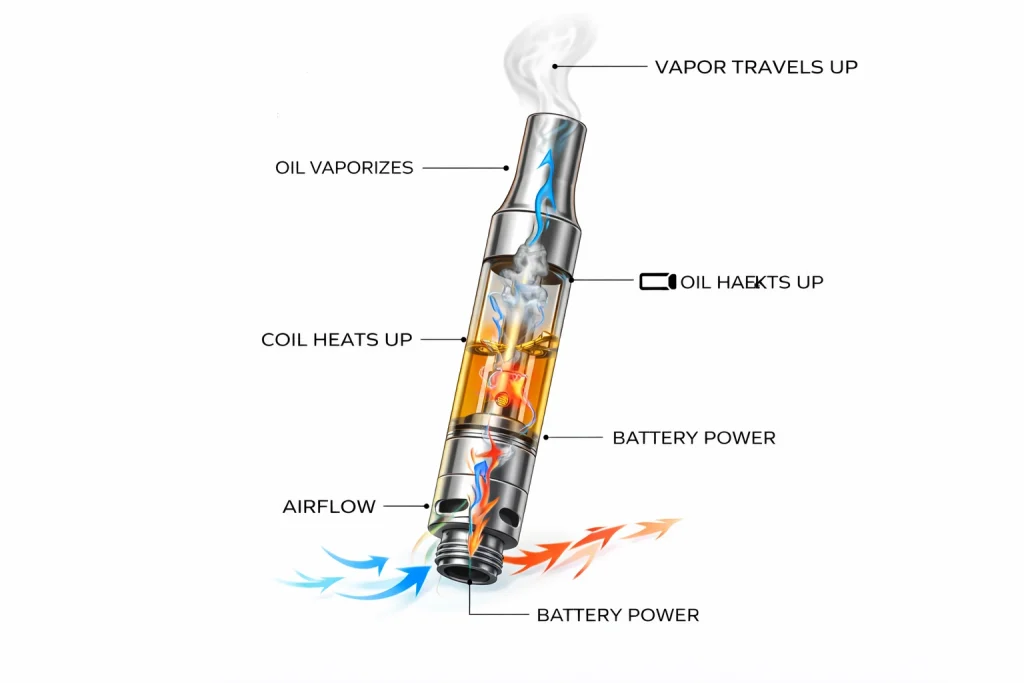
The magic happens when the battery and cartridge meet. When you activate the battery, an electrical current travels through the center pin of the 510 thread and into the cartridge’s heating element.
This element is usually wrapped around or embedded in a wicking material (often ceramic in modern carts). The wick absorbs the oil from the tank. As the element heats up, the oil saturated in the wick reaches its boiling point and transforms into vapor.
Airflow is the final piece of the puzzle. When you inhale, air is pulled through the bottom of the cartridge, past the heating element, and up through the central chimney, carrying the vapor into your lungs. If the oil is too thick, it won’t saturate the wick fast enough, leading to “dry hits.” If the oil is too thin, it might flood the chamber and leak.
Different Types of Cartridges Available
Not all carts are created equal. You will encounter variety based on both the substance inside and the hardware itself.
Based on Oil Type
- Distillate: The most common type. It is highly refined, potent, and usually flavorless until terpenes are reintroduced.
- Live Resin: Made from fresh-frozen cannabis plants. It retains more of the natural terpene profile, offering a flavor that is truer to the original plant.
- Live Rosin: A solventless extract made using heat and pressure. It is considered the premium, connoisseur choice.
- CBD: Non-psychoactive cartridges derived from hemp, used for relaxation without the high.
Based on Hardware Design
- Ceramic Coils: The modern industry standard. Ceramic handles high heat well and provides pure flavor.
- Wick and Coil: Older technology using a cotton wick. These are prone to burning if the oil is too thick.
- All-Glass: A newer trend where the oil touches only glass, appealing to health-conscious consumers who want to avoid metal contact.
How to Use a Vape Pen Step by Step
Using a 510 vape is intuitive, but doing it correctly extends the life of your hardware.
- Attach the Cartridge: Screw the cart onto the battery. Stop as soon as you feel resistance. Overtightening can push the center pin down and break the electrical connection.
- Power On: If you have a button battery, click it 5 times rapidly to turn it on.
- Adjust Settings: If your battery has variable voltage, start low.
- Inhale: Press the button (if applicable) and inhale gently. A slow, steady draw creates better vapor than a sharp, hard pull.
- Cool Down: Release the button a second before you stop inhaling to clear any remaining vapor from the chimney.
Common Mistake: Don’t chain-vape. Hitting the pen repeatedly without pause keeps the coil hot and can burn the oil, ruining the flavor of the entire cartridge.
How to Choose the Right Cartridge
Selecting the right product depends on your experience level and your battery.
If you are a beginner using a simple draw-activated pen, look for cartridges with thinner oil or wider intake holes. Thick live rosin might clog a weak battery. If you prioritize flavor, seek out Live Resin or Rosin carts, but ensure you have a battery with adjustable voltage so you can burn it at a lower temperature.
Always check the materials. Stainless steel and glass are preferable to plastic. Cheap cartridges can leach heavy metals or degrade when heated, so purchasing from reputable brands is non-negotiable.
Common Issues and How to Fix Them
Even the best hardware acts up occasionally. Here is how to troubleshoot the most frequent annoyances.
No Vapor Produced
The light is on, but nothing is coming out. This usually means a connection issue. The center pin on the cartridge might not be touching the battery plate.
- Fix: Use a paperclip to very gently pry the center pin of the cartridge down a millimeter.
Clogging
You try to inhale, but it feels like sucking on a milkshake. This happens when vapor condenses in the airway or oil leaks into the chimney.
- Fix: If your battery has a pre-heat function, run it for a few seconds. Alternatively, warm the cartridge between your hands and take a strong “dry hit” (without activating the heat) to pop the clog.
Burnt Taste
This is the worst. It means the wick is dry and burning.
- Fix: Let the pen sit upright for 10 minutes to allow oil to soak into the wick. Turn your voltage down. Once a wick is severely burnt, however, the taste usually lingers.
Maintenance and Care
Vape pens are low maintenance, not no maintenance.
Keep the threads clean. Over time, small amounts of oil or dust will build up on the connection points. Dip a cotton swab in isopropyl alcohol and gently wipe the threads of both the battery and the cartridge. This ensures a clean electrical current.
Store upright. Never leave a cartridge lying on its side or upside down. This causes oil to pool in the mouthpiece (causing clogs) or move away from the intake holes (causing dry hits).
Avoid extreme temperatures. Don’t leave your vape in a hot car. Heat thins the oil, leading to massive leaks. Conversely, extreme cold makes the oil too thick to vape.
Safety Best Practices
Battery safety is paramount. Lithium-ion batteries store a lot of energy in a small package.
- Don’t Overcharge: Don’t leave your pen plugging in overnight.
- Use the Right Charger: Using a high-speed phone charger block for a cheap vape pen can damage the battery lifespan. Stick to standard USB ports.
- Inspect Your Hardware: If you drop your pen and the cartridge glass cracks, throw it away. Inhaling microscopic glass shards is not a risk worth taking.
Advanced Knowledge for Experienced Users
Ready to move beyond the basics? Let’s talk about voltage optimization and resistance.
Voltage dictates how hot your coil gets.
- Low Voltage (2.0V – 2.6V): Best for Live Resin and Rosin. It produces less vapor but preserves the delicate terpenes and flavor.
- Medium Voltage (2.6V – 3.2V): The standard range for distillate. A balance of flavor and cloud production.
- High Voltage (3.3V+): produces massive clouds but risks burning the oil and destroying flavor compounds.
Resistance (measured in Ohms) also plays a role. Most standard carts are around 1.2 to 1.5 ohms. If you encounter a “sub-ohm” cartridge (under 1.0 ohm), it will require a more powerful battery to function correctly, as it allows more current to flow through the coil.
The Role of Packaging and Protection
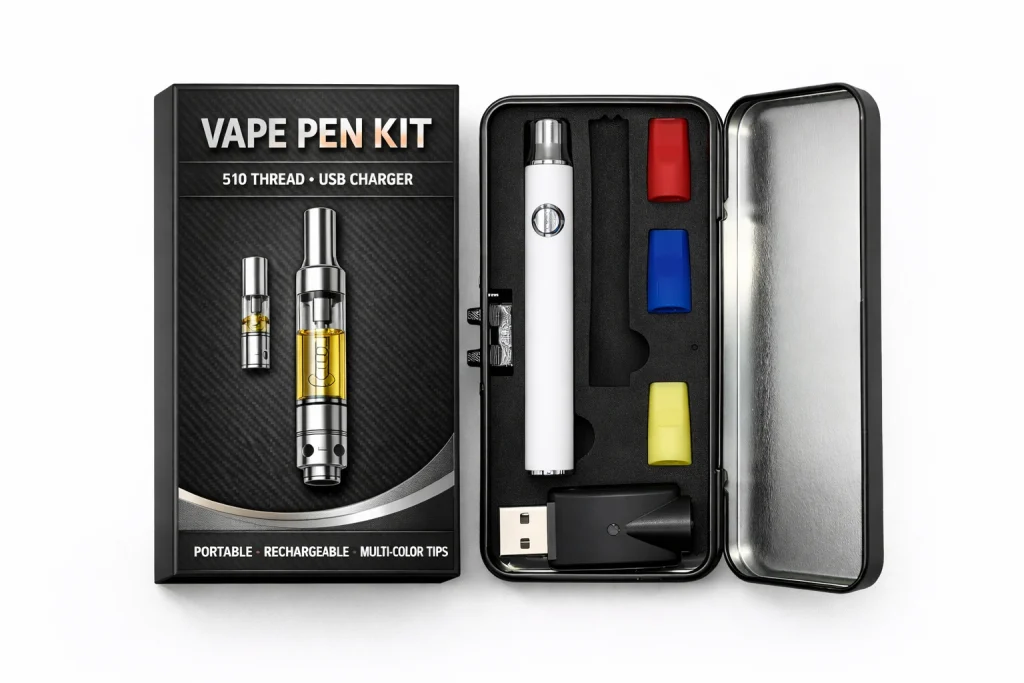
While we often focus on the hardware, the packaging plays a critical role in your experience. 510 cartridges are fragile. They are made of glass and precision electronics.
High-quality packaging ensures that the cartridge hasn’t been crushed during shipping or storage. It also protects against UV light, which can degrade the cannabinoids in the oil, turning your potent product into a sleepy, ineffective one. Furthermore, tamper-evident and child-resistant packaging are key indicators of a legitimate, regulated brand that cares about safety. When buying, look for boxes that hold the cart securely upright to prevent pre-purchase leaks.
Frequently Asked Questions
What does 510 thread mean?
It refers to the connection threading: 10 threads at 0.5 mm. It is the universal standard for vape pens.
Are all cartridges compatible with all batteries?
Mostly, yes. As long as both are 510 threaded, they will physically fit. However, a very large cartridge might not fit into a “conceal” style battery where the cart sits inside a box. Additionally, high-viscosity oils may not vape well on low-power, draw-activated batteries.
How long does a cartridge usually last?
This depends entirely on usage. A standard 0.5g cartridge typically provides around 150 puffs. For a moderate user, this could last a week; for a heavy user, a day or two.
Can they be refilled?
Some are designed to be refillable (look for a screw-off mouthpiece). However, most dispensary cartridges are designed for single use. Refilling a disposable cart often leads to clogging and leaking as the coil degrades.
Why do cartridges clog?
Clogs are usually caused by un-vaporized oil condensing in the airway or by storing the device on its side.
What’s best for beginners?
A button-activated battery with variable voltage is the best starting point. It gives you control to fix issues if the oil is too thick or the hit is too harsh, which draw-activated batteries don’t offer.
Conclusion
The 510 vape pen has become the go-to choice for portable vaping thanks to its perfect balance of convenience, performance, and flexibility. When you understand how these devices work—from voltage settings to proper storage—you can enjoy smoother sessions, better flavor, and a safer overall experience.
Whether your goal is dense clouds or rich terpene flavor, the reliable 510 thread remains the foundation of it all. Taking care of your device, choosing high-quality cartridges, and using protective solutions like a 510 Thread Vape Box can help preserve both product quality and longevity. With the right approach, this industry standard offers a level of versatility that few systems can match.