


If you have recently switched from smoking to vaping, or if you are simply curious about the sweet-smelling clouds you see on the street, you likely have one pressing question: What is inside a vape juice?
It is a valid concern. For decades, we have been warned about the dangers of inhaling substances into our lungs. When you pick up a vape device, you are trusting that the liquid inside is safer than the thousands of chemicals found in traditional cigarette smoke. But without a clear understanding of the ingredients, that trust can feel a bit like a leap of faith.
The world of vaping can be overwhelming for beginners. You are bombarded with terms like “PG/VG ratios,” “nic salts,” and “sub-ohm,” all while trying to figure out if what you are inhaling is actually okay for you. Many people ask, “what is inside vape juice” because they want to take control of their health. They want to know if they are trading one bad habit for another, or if they are making a genuine harm-reduction choice.
Understanding the chemistry of your e-liquid is the first step toward a better vaping experience. Knowing what goes into your device allows you to customize your experience, avoid potential irritants, and spot low-quality products before they cause issues.
In this comprehensive guide, we will peel back the label and examine exactly what is inside a vape liquid. We will break down every ingredient, explain why it is there, and debunk common myths so you can vape with confidence and clarity.
What Is Vape?
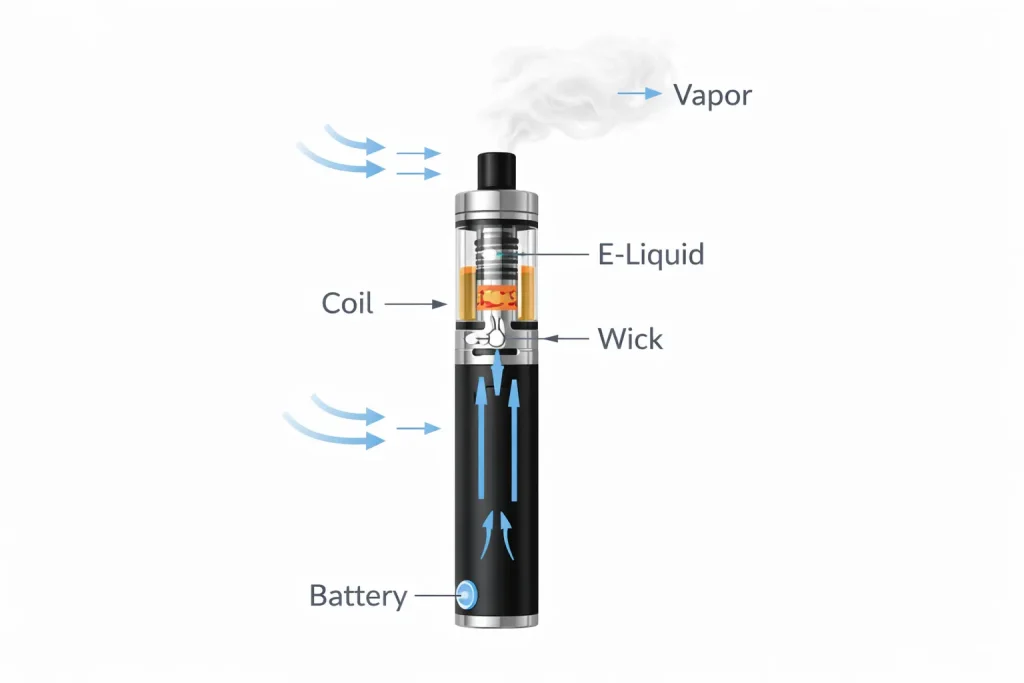
Before we dive into the specific chemical components, let’s establish what we are actually talking about. Vape juice—also commonly referred to as e-liquid, e-juice, or vape liquid—is the fluid fuel used in electronic cigarettes and vaporizers.
The concept is relatively simple. Your vaping device contains a battery and a heating element (usually a coil). When you activate the device, the battery sends power to the coil, heating it up. The vape juice saturates a wick that runs through the coil. As the coil gets hot, it turns the liquid into an aerosol, which is the “vapor” you inhale.
Unlike traditional smoking, which relies on combustion (burning), vaping relies on vaporization. This distinction is critical because burning plant matter creates tar and carbon monoxide, whereas vaporization essentially just changes the state of the liquid from fluid to gas.
Vape juice comes in a massive variety of flavors, ranging from traditional tobacco and menthol to complex desserts, fruits, and beverages. It also comes in various nicotine strengths, allowing users to gradually lower their intake over time—a feature that makes it a popular tool for smoking cessation.
What Is Inside Vape Juice?
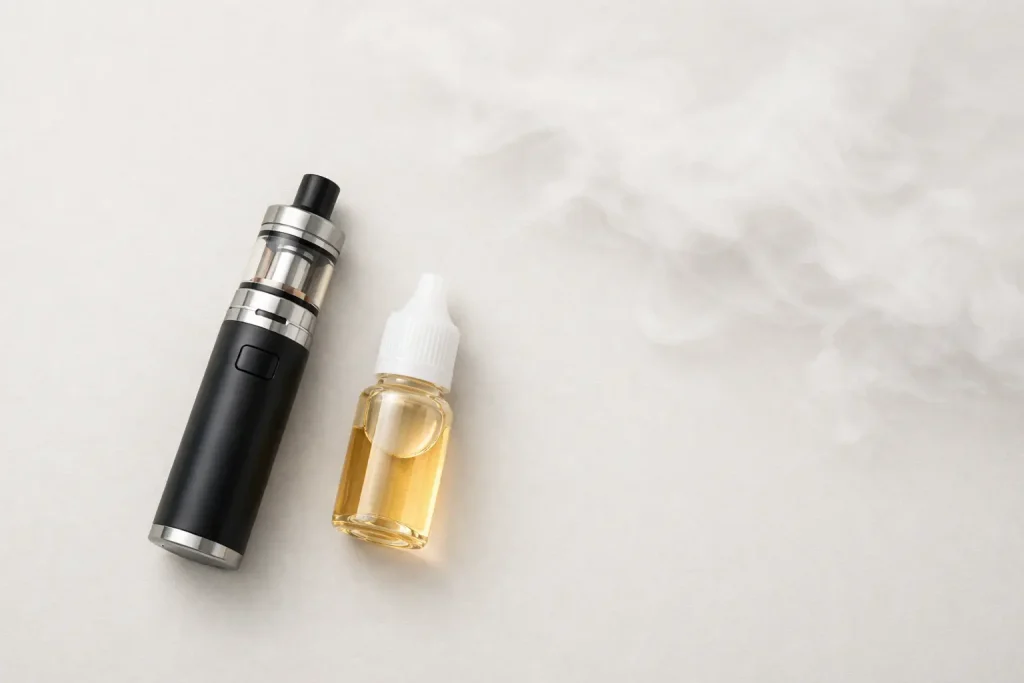
If you look at the back of a pack of cigarettes, you won’t find an ingredients list. If you did, it would be terrifyingly long. In contrast, the ingredient list for vape juice is surprisingly short.
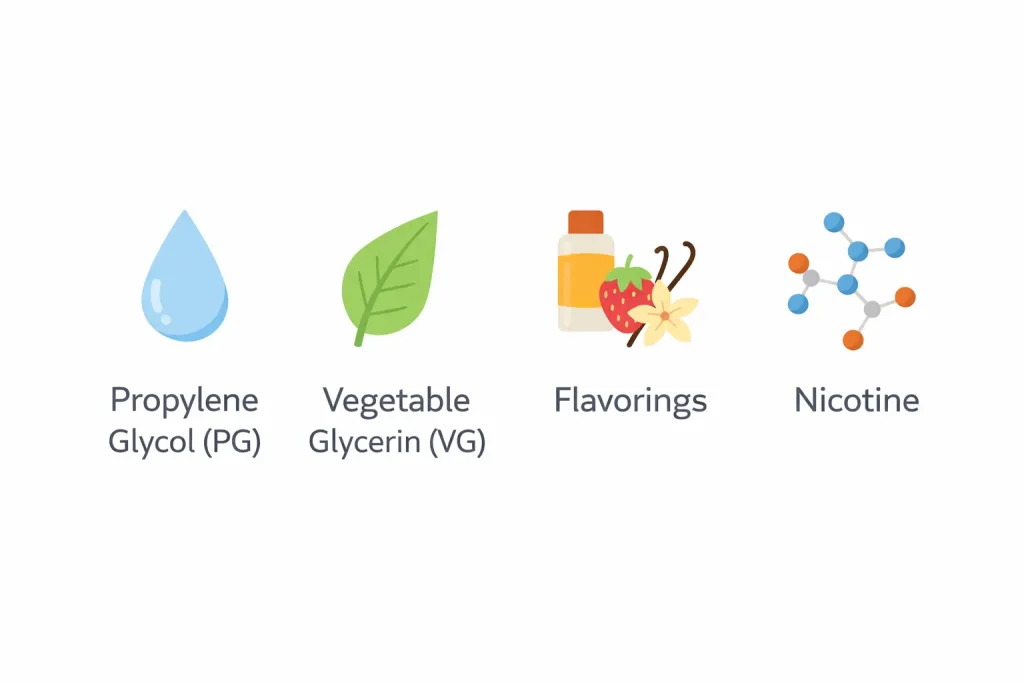
For the vast majority of reputable e-liquids on the market, the recipe consists of just four primary components. Here is the short list for easy understanding:
- Propylene Glycol (PG)
- Vegetable Glycerin (VG)
- Flavorings
- Nicotine (optional)
That is usually it. There are no hidden tars, no carbon monoxide, and no solid particulates—assuming you are buying from a legitimate source. Let’s explore each of these ingredients in detail to understand their specific roles.
Ingredients Inside Vape Juice Explained Simply
To truly answer “what is inside vape juice,” we need to look at the function of each ingredient. It is not just about what they are, but what they do to your vaping experience.
Propylene Glycol (PG)
Propylene Glycol, or PG, is one of the two base liquids used in vape juice. It is a synthetic organic compound that is colorless, odorless, and has a very thin, watery consistency.
While the name might sound chemical and intimidating, PG is actually incredibly common in our daily lives. It is recognized as safe for consumption by food safety authorities in many countries and is found in everything from asthma inhalers and toothpaste to salad dressings and ice cream.
In vape juice, PG serves two main purposes:
- Carrying Flavor: PG is excellent at carrying flavor concentrates. It doesn’t have a taste of its own, so it doesn’t interfere with the strawberry or vanilla notes in your liquid.
- The “Throat Hit”: If you are an ex-smoker, you know that distinct sensation at the back of your throat when you inhale smoke. PG mimics this sensation, providing a “throat hit” that helps satisfy the craving for a cigarette.
High-PG liquids are generally preferred by people who want a stealthier vape (less cloud) and a stronger, more cigarette-like sensation.
Vegetable Glycerin (VG)
Vegetable Glycerin, or VG, is the other half of the base equation. Unlike PG, VG is derived from vegetable oils (usually palm, soy, or coconut). It is a thick, viscous liquid that is clear but has a slightly sweet taste.
VG is also widely used in the food and cosmetic industries. You will find it in sweeteners, lotions, soaps, and even baked goods to keep them moist.
In the context of vaping, VG is responsible for the visual aspect:
- Vapor Production: Because it is thicker, VG produces dense, voluminous clouds of vapor when heated. If you see someone blowing huge rings of vapor, they are likely using a high-VG liquid.
- Smoothness: VG is much smoother on the throat than PG. It acts as a buffer, making the vapor easier to inhale deeply without coughing.
Most modern e-liquids use a blend of both. A “50/50” blend offers a balance of flavor and vapor, while a “70/30” blend (70% VG) is smoother and cloudier.
Flavorings
This is where the magic happens. Without flavorings, vaping would be a bland experience (mostly just tasting slightly sweet from the VG).
The flavor concentrates used in vape juice are generally food-grade flavorings. These are the same types of concentrates used to flavor candies, sodas, and processed foods. However, reputable manufacturers formulate them specifically for inhalation.
It is important to note that not all food flavorings are safe to vape. Oil-based flavorings, for example, can be dangerous if inhaled into the lungs (lipid pneumonia). This is why you should never try to make your own vape juice using grocery store vanilla extract or essential oils. Professional vape juice manufacturers use water-soluble flavorings that are tested for safety standards.
The variety is endless—you can find flavors that mimic breakfast cereals, tropical cocktails, fresh mint, or rich custards. This variety is often cited as a key reason why smokers are able to switch to vaping; it dissociates the act of nicotine consumption from the taste of burning tobacco.
Nicotine (Optional)
Finally, we have nicotine. This is the addictive component found in tobacco plants, but in vape juice, it is generally added in a purified liquid form.
It is crucial to understand that nicotine is optional. You can buy “0mg” vape juice that contains absolutely no nicotine, purely for the enjoyment of the flavor and the sensation of vaping.
For those using vaping to quit smoking, nicotine comes in different strengths (e.g., 3mg, 6mg, 12mg) and different formulations:
- Freebase Nicotine: The traditional form, which provides a slower absorption and a stronger throat hit.
- Nicotine Salts: A newer formulation that uses a natural acid to smooth out the harshness, allowing users to vape higher strengths of nicotine without it hurting their throat. This is popular in low-power pod devices.
Beginners should choose their strength carefully. Too much nicotine can cause dizziness or nausea, while too little might leave you reaching for a cigarette.
What Is Inside Vape Liquid vs Cigarettes
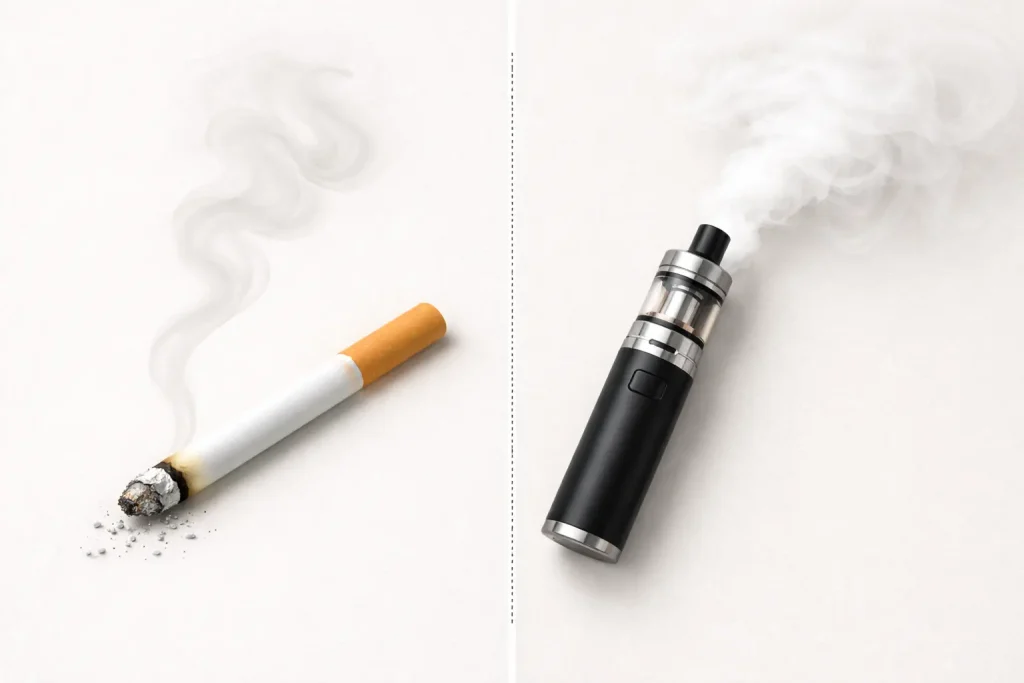
When people ask what is inside vape juice, they are often mentally comparing it to what is inside a cigarette. The difference is stark.
Traditional tobacco cigarettes are complex chemical factories. When you light a cigarette, the combustion process creates smoke containing over 7,000 chemicals. Among these are known carcinogens (cancer-causing agents) like arsenic, formaldehyde, benzene, and heavy metals. The “tar” in cigarettes is the sticky residue from this burning process that coats the lungs.
Vape liquid, as we have established, generally contains four ingredients. Because there is no burning, there is no tar and no carbon monoxide—two of the most harmful byproducts of smoking.
While vape aerosol can contain trace amounts of toxic chemicals (usually if the coil is overheated or “dry”), studies have consistently shown that the levels are significantly lower than those found in cigarette smoke.
However, “safer” does not mean “risk-free.” Vaping is a harm reduction tool. It is intended to be a less harmful alternative for adult smokers, not a health supplement for non-smokers.
Is What’s Inside Vape Juice Safe?
The safety of what is inside vape juice depends heavily on where you get it.
The main ingredients (PG, VG, and food-grade flavorings) have a good safety profile for ingestion, and long-term inhalation studies are promising compared to smoking. However, the market has seen issues with black-market or low-quality products.
You may have heard of lung injuries related to vaping (EVALI). It is vital to distinguish that these outbreaks were primarily linked to illicit THC (marijuana) vape cartridges that contained Vitamin E Acetate—a thickening agent. Vitamin E Acetate should never be inside nicotine vape juice.
Research is still ongoing regarding the long-term effects of inhaling certain flavor compounds. For example, diacetyl (a buttery flavoring) was removed from most reputable e-liquids years ago due to concerns about “popcorn lung,” though it is worth noting that cigarettes contain significantly more diacetyl than vapes ever did.
To ensure safety, you must choose trusted and tested brands. Reputable manufacturers operate in clean rooms (ISO-certified labs) and submit their products for toxicological testing.
How to Check What Is Inside Vape Juice Before Buying
You have the power to verify what you are inhaling. Here is how to check what is inside vape juice before you make a purchase:
- Read the Ingredient Label: Legitimate bottles will clearly list Propylene Glycol, Vegetable Glycerin, Natural & Artificial Flavorings, and Nicotine. If the label is vague or missing, do not buy it.
- Look for Lab Tests: Top-tier brands often publish their “Certificate of Analysis” or lab results online. This proves that an independent lab has tested the liquid for contaminants.
- Check for Batch Numbers: A bottle with a batch number and expiration date indicates that the manufacturer tracks their production, which is a sign of quality control.
- Buy from Reputable Sellers: Avoid buying vape juice from gas stations, flea markets, or unverified online sellers. dedicated vape shops and established online retailers have a reputation to protect and generally stock only verified brands.
- Avoid Unknown Brands: If a brand looks like a cheap knock-off of a popular candy or cartoon, stay away. These companies often ignore safety regulations to make a quick buck.
Common Myths About What Is Inside Vape Juice
There is a lot of misinformation floating around the internet. Let’s clear up a few myths about what is inside vape juice.
Myth 1: Vape is just water vapor.
❌ False. It is not water. It is an aerosol made of PG, VG, and flavorings. While it contains some water absorbed from the air, calling it “just water vapor” is scientifically incorrect.
Myth 2: All vape juice contains nicotine.
❌ False. As mentioned earlier, 0mg (nicotine-free) options are widely available and popular among those who have weaned themselves off nicotine completely.
Myth 3: More vapor means safer.
❌ False. The amount of vapor is determined by the VG content and the power of the device. It has no direct correlation to the safety of the ingredients. In fact, heating any liquid to extremely high temperatures can potentially degrade the ingredients, so moderation is key.
Myth 4: Vape juice contains antifreeze.
❌ False. This myth comes from the fact that PG is sometimes used in “non-toxic” antifreeze (to replace the toxic ethylene glycol). Just because an ingredient is used in an industrial application does not make it toxic—water is used in nuclear reactors, but we still drink it!
FAQs About What Is Inside Vape Juice
What is inside vape juice exactly?
Vape juice typically contains Propylene Glycol (PG), Vegetable Glycerin (VG), food-grade flavorings, and optionally nicotine.
What is inside vape liquid that gives flavor?
The flavor comes from food-grade concentrates. These are water-soluble flavorings similar to those used in baking and candy making, but formulated for inhalation.
Does vape juice always contain nicotine?
No. You can purchase vape juice in varying nicotine strengths, including 0mg, which is completely nicotine-free.
Is vape liquid harmful?
While generally considered much less harmful than cigarette smoke, vape liquid is not completely risk-free. The safety depends on the quality of the ingredients and the absence of contaminants. It is not recommended for non-smokers.
What happens when vape juice is heated?
When heated by the coil, the liquid undergoes a phase change into an aerosol (vapor). If heated to extreme temperatures (burnt coil), it can degrade and produce unpleasant tastes and potentially harmful byproducts, so it is important to keep your coil fresh.
The Bottom Line on E-Liquid Ingredients
When you remove the marketing hype and common myths, the answer to “what is inside vape juice” is actually quite simple. Most e-liquids are made from just four well-known components: PG, VG, flavorings, and nicotine.
Knowing what’s in your vape juice helps you make smarter decisions. It explains why some liquids feel harsh on the throat while others produce smoother, thicker clouds. It also highlights why choosing cheap, unverified products can be risky.
If you’re a smoker thinking about switching, understanding what is inside vape juice can offer reassurance that you’re moving away from the thousands of harmful chemicals found in cigarette smoke toward a simpler alternative. Pairing quality e-liquid with a reliable device like a Vape Box with Battery & Charger can further support a better experience. Always choose trusted products and pay attention to how your body responds as you move forward on your vaping journey.